
Authors
Abstract
This study aims to analyse the relationship between the incidence of bad splits and the surgical tools adopteded to perform bilateral sagittal split ramus osteotomy (BSSRO).BSSROs performed by the same experienced surgeon period were reviewed, retrospectively. The patients were divided into three groups according to the surgical instrument used to perform the osteotomy: a Lindemann burr, reciprocating saw or piezosurgery. Among the 1120 BSSROs performed, 5 bad fractures were detected during the observation period: 3 among patients operated with the Lindemann burr (0.8%) and 2 among those operated with a reciprocating saw (0.5%). There was no significant correlation between the bad split rate and age and gender of the patients, the type of malocclusion or the type of instrument used to perform the osteotomy. Within the limitations of the study it seems that the the choice of the osteotomy tool for BSSRO does not influence the rate of bad fractures and, therefore, the selection of the osteotmy tool should be left to the discretion of the surgeon.
Keywords: BSSO; Bad split; Complication; Orthognathic surgery; Osteotomy; Unfavourable split pattern.
Copyright © 2022 European Association for Cranio-Maxillo-Facial Surgery. Published by Elsevier Ltd. All rights reserved.
DOI
Altri articoli pubblicati

Marzo 2021
Oral Maxillofac Surg. 2021 Mar;25(1):75-79. doi: 10.1007/s10006-020-00897-w. Authors [...]
Gennaio 2021
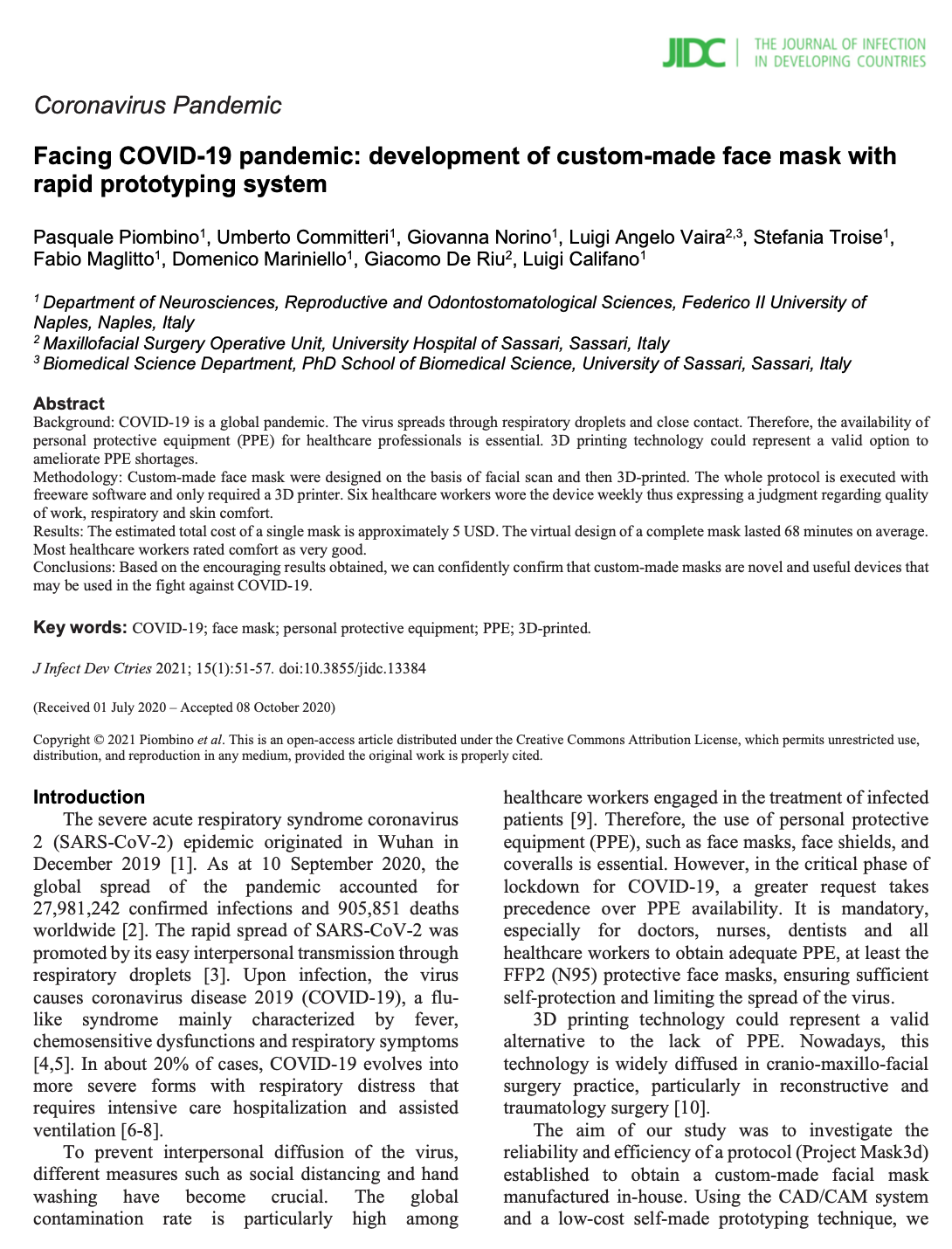
the availability of personal protective equipment (PPE) for healthcare professionals is essential. 3D printing technology could represent a valid option to ameliorate PPE shortages Based on the encouraging results obtained, we can confidently confirm that custom-made masks are novel and useful devices that may be used in the fight against COVID-19

Dicembre 2020
Br J Oral Maxillofac Surg. 2020 Dec;58(10):e265-e271. doi: 10.1016/j.bjoms.2020.07.022 [...]