

Authors
Abstract
Background: Persistent olfactory (POD) and gustatory (PGD) dysfunctions are one of the most frequent symptoms of long-COVID-19 but their effect on the quality of life (QoL) of patients is still largely unexplored.
Methods: An online survey was administered to individuals who reported to have had SARS-CoV-2 infection at least 6 months prior with persisting COVID-19 symptoms, including ratings of POD and PGD, and their physical (PCS) and mental (MCS) components of quality of life were assessed using the standardized short form 12 questionnaire (SF-12).
Results: Responses from 431 unique individuals were included in the analyses. The most frequent persistent symptoms were fatigue (42.9%), olfactory dysfunction (29.5%), gustatory dysfunction (22.3%) and muscle pain (19.3%). Respondents reporting POD or PGD showed significantly worse QoL, but only pertaining to the mental component.
Conclusions: POD and PGD are frequent symptoms of the long-COVID-19 syndrome and significantly reduce quality of life, specifically in the mental health component. This evidence should stimulate the establishment of appropriate infrastructure to support individuals with persistent symptoms, while research on effective therapies scales up.
Keywords: fat graft; lipofilling; maxillo-facial surgery; orofacial SSc; systemic sclerosis.
DOI
Citazione
Condividi questo articolo scientifico...
Altri articoli pubblicati
Settembre 2024
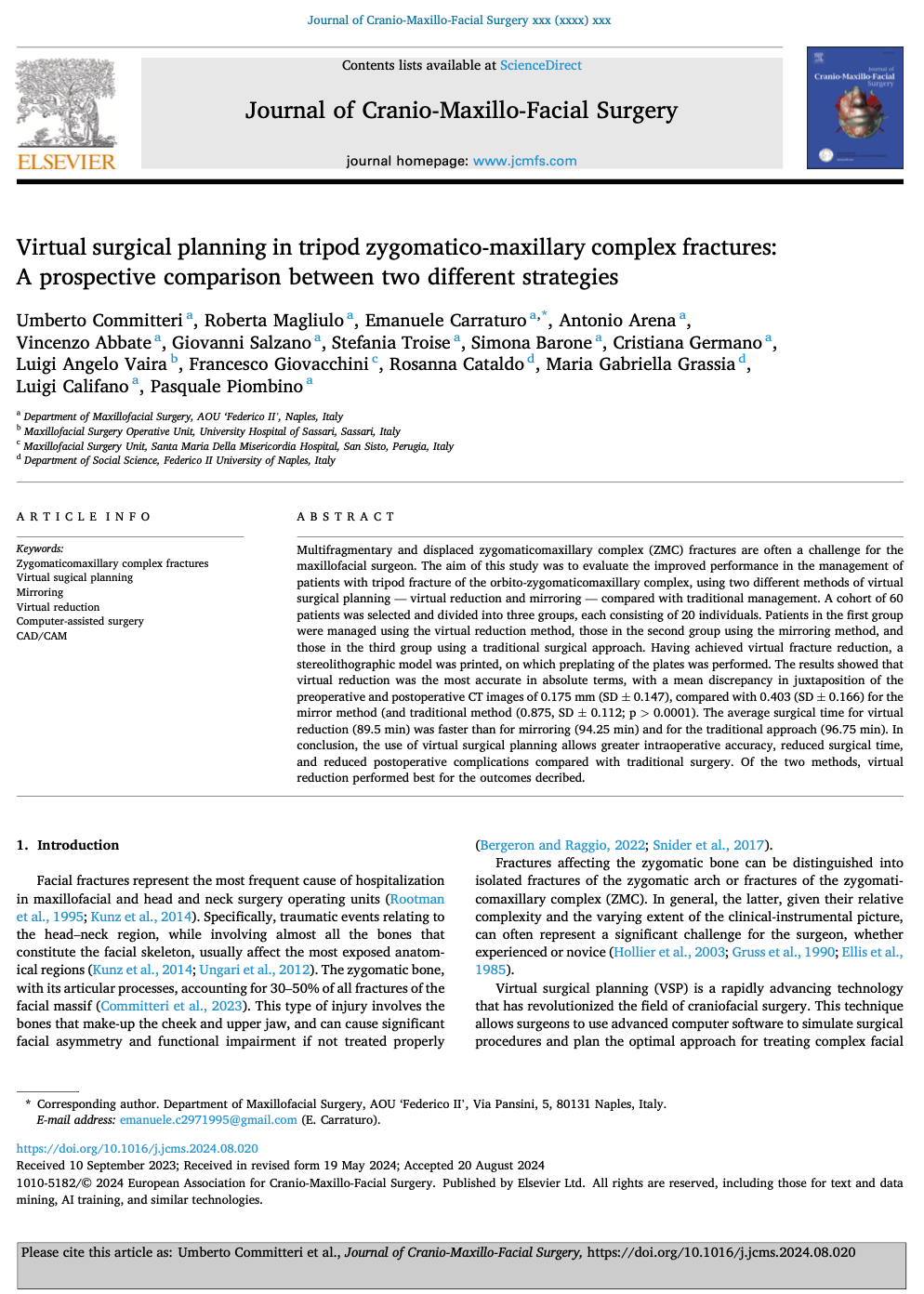
The use of virtual surgical planning allows greater intraoperative accuracy, reduced surgical time, and reduced postoperative complications compared with traditional surgery. Of the two methods, virtual reduction performed best for the outcomes decribed
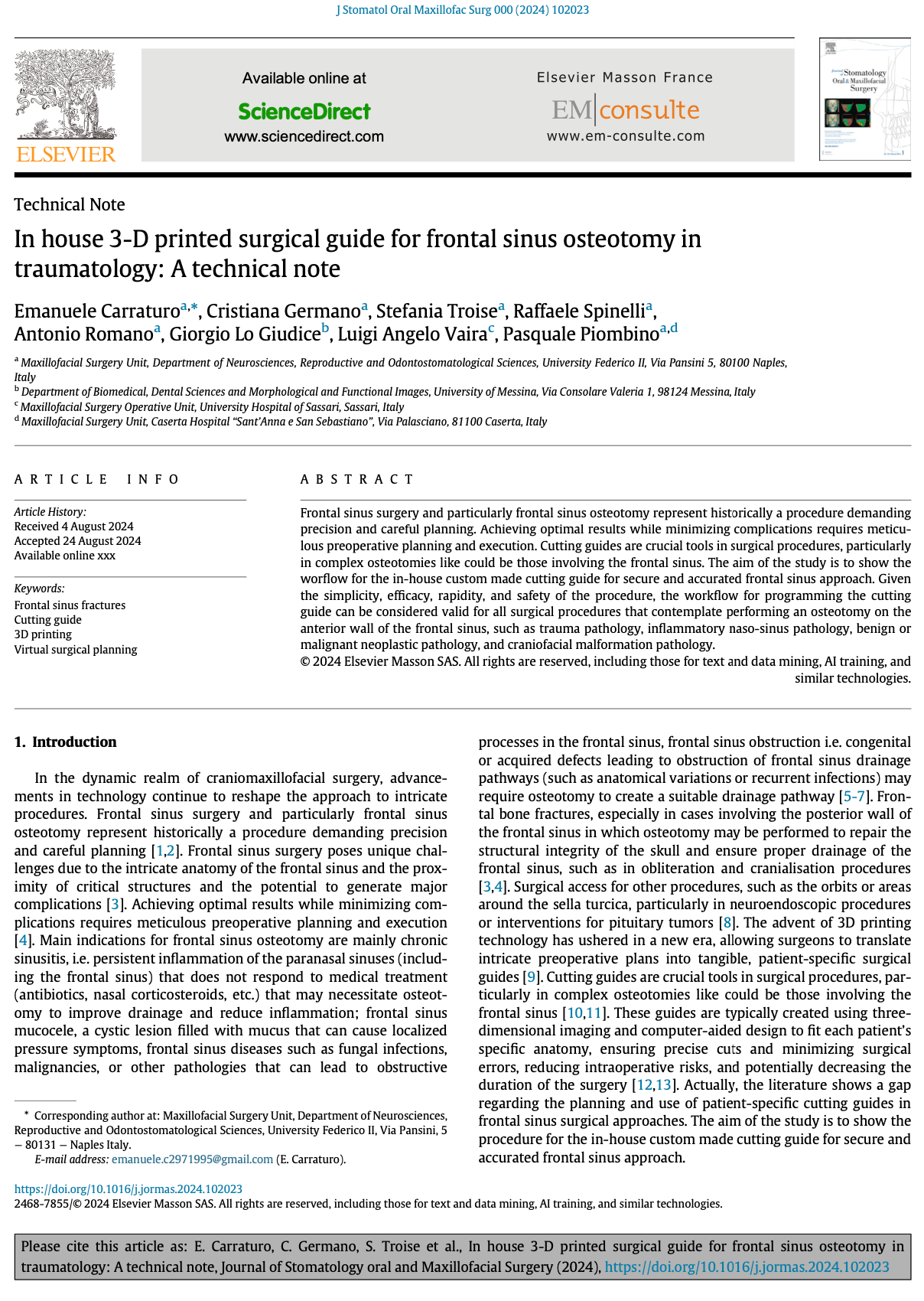
Settembre 2024
J Stomatol Oral Maxillofac Surg. 2024 Aug 30:102029 [...]
Settembre 2024
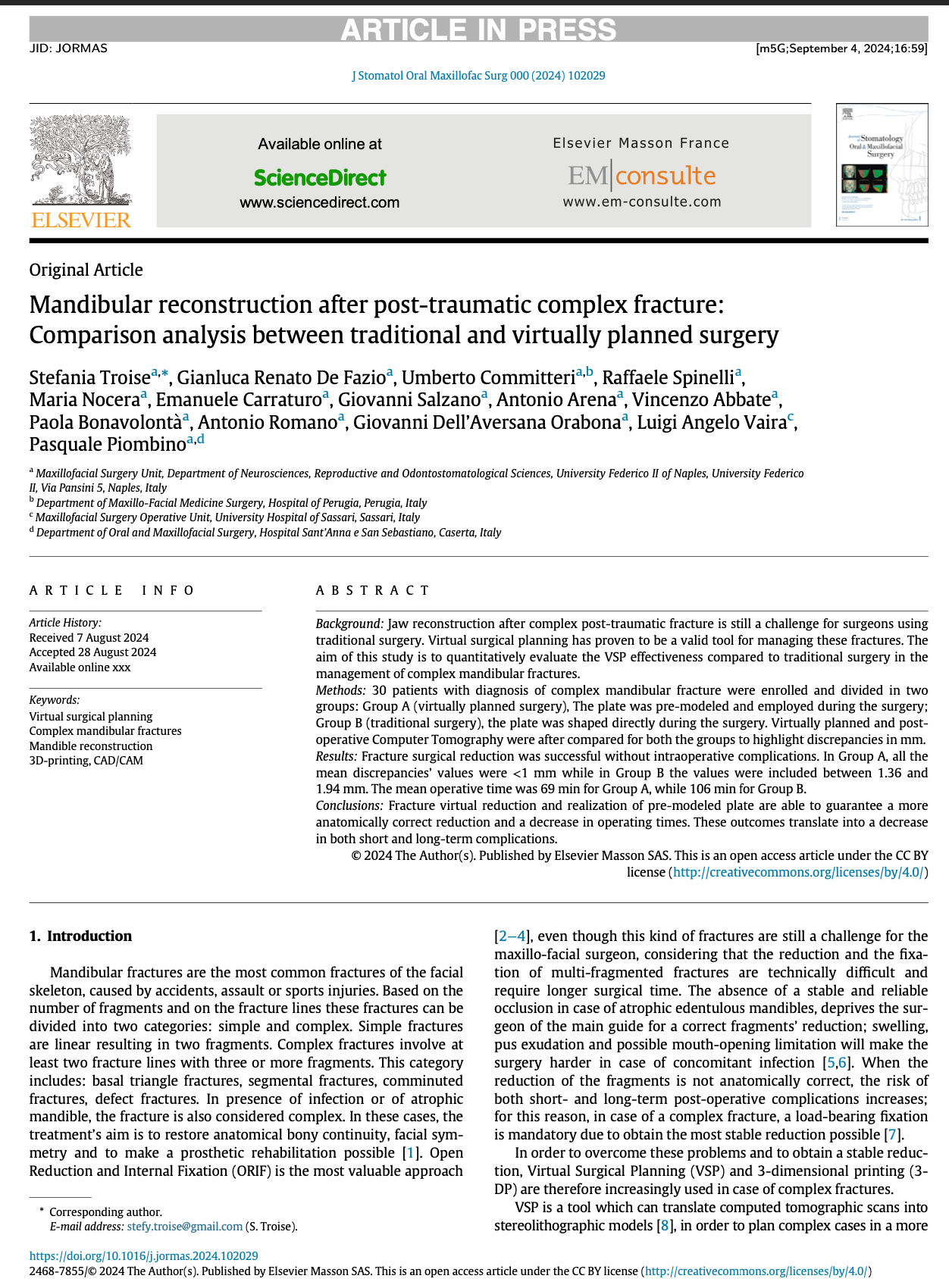
Fracture virtual reduction and realization of pre-modeled plate are able to guarantee a more anatomically correct reduction and a decrease in operating times. These outcomes translate into a decrease in both short and long-term complications.