

Authors
Abstract
Although the modifications of the aging face have been widely described, to our knowledge, there are no studies that quantitatively analyze the degree of soft tissues facial ptosis. Using a specific iPhone application, the faces of a heterogeneous group of volunteers were scanned and studied with the aim to virtually measure the entity of facial ptosis.Two facial scans, upright and supine, were performed by using the Bellus3D Face app for iPhone in a sample of 60 volunteers. We virtually superimposed the two scans, and then, we calculated the discrepancy between them through the Geomagic Design X 3D software. A multivariate regression statistical model was used to analyze the correlation between the mean discrepancy values compared to three main variables: age, BMI and gender. Mean ptosis increases with age (coeff. = 0.02; 95% CI = 0.01-0.02, p < 0.001), BMI (coeff. = 0.03; 95% CI = 0.01-0.05; p < 0.001) and has been found higher in females (female versus male: coeff. = 0.22; 95% CI = 0.13-0.31; p < 0.001). The method we used allowed us to measure the degree of ptosis, and to make a complete morphological study of the effect of gravity on the facial surface in a very accurate, low cost and easily reproducible way.
Keywords: Age; Aging face; BMI; Facial ptosis; Virtual planning; iPhone app.
DOI
Citazione
Condividi questo articolo scientifico...
Altri articoli pubblicati
Settembre 2024
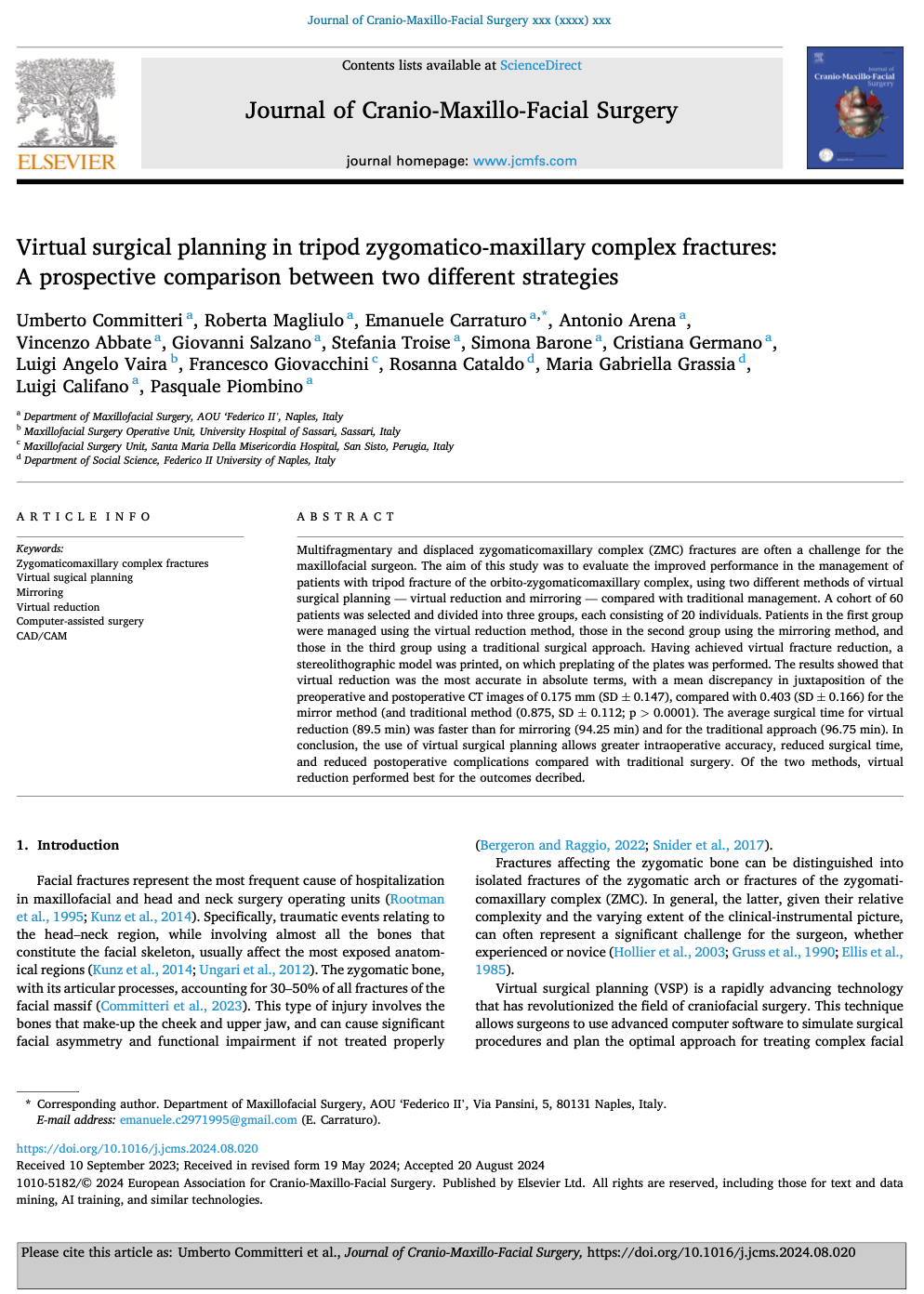
The use of virtual surgical planning allows greater intraoperative accuracy, reduced surgical time, and reduced postoperative complications compared with traditional surgery. Of the two methods, virtual reduction performed best for the outcomes decribed
Settembre 2024
J Stomatol Oral Maxillofac Surg. 2024 Aug 30:102029 [...]
Settembre 2024
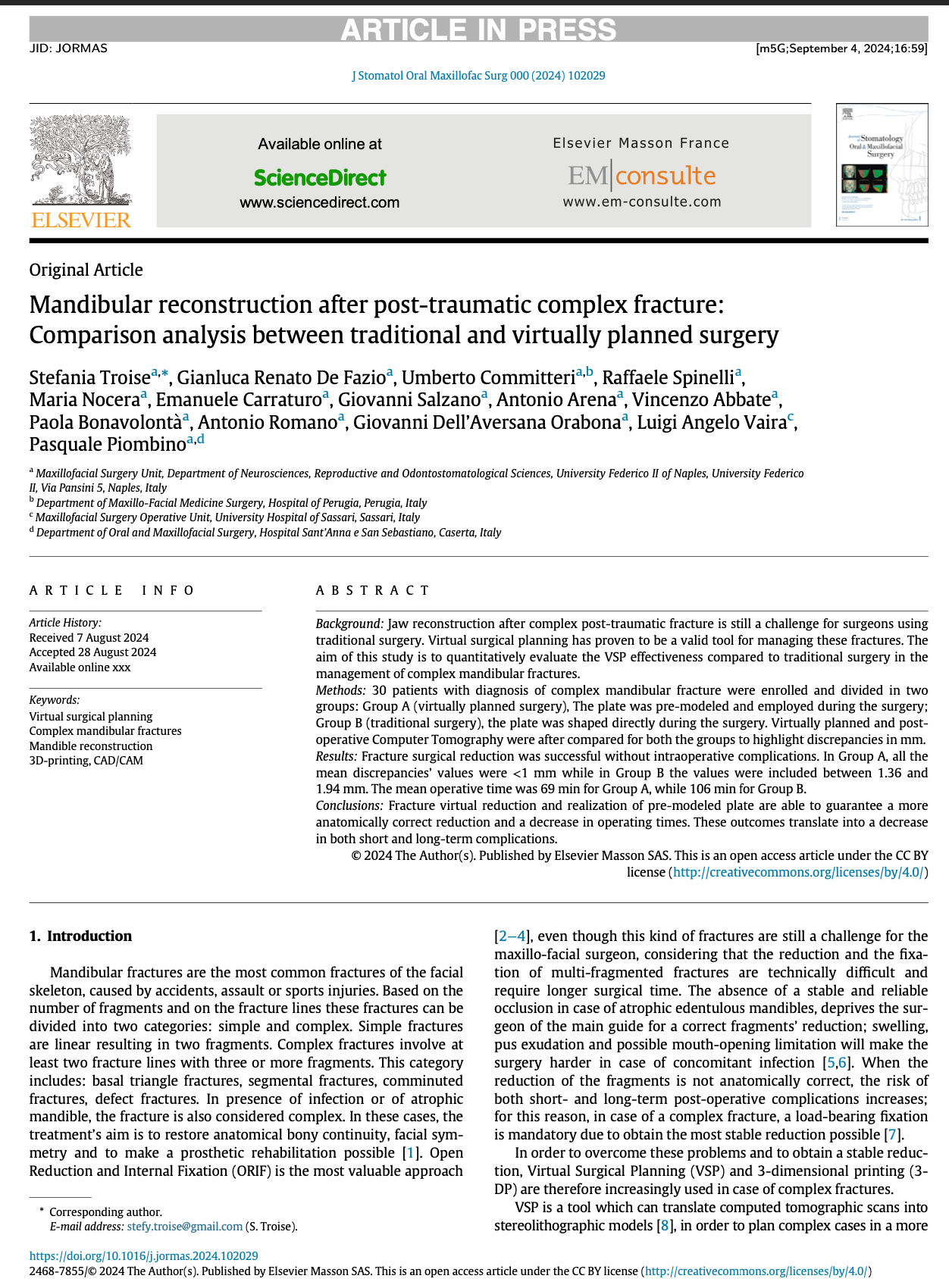
Fracture virtual reduction and realization of pre-modeled plate are able to guarantee a more anatomically correct reduction and a decrease in operating times. These outcomes translate into a decrease in both short and long-term complications.