
Authors
Abstract
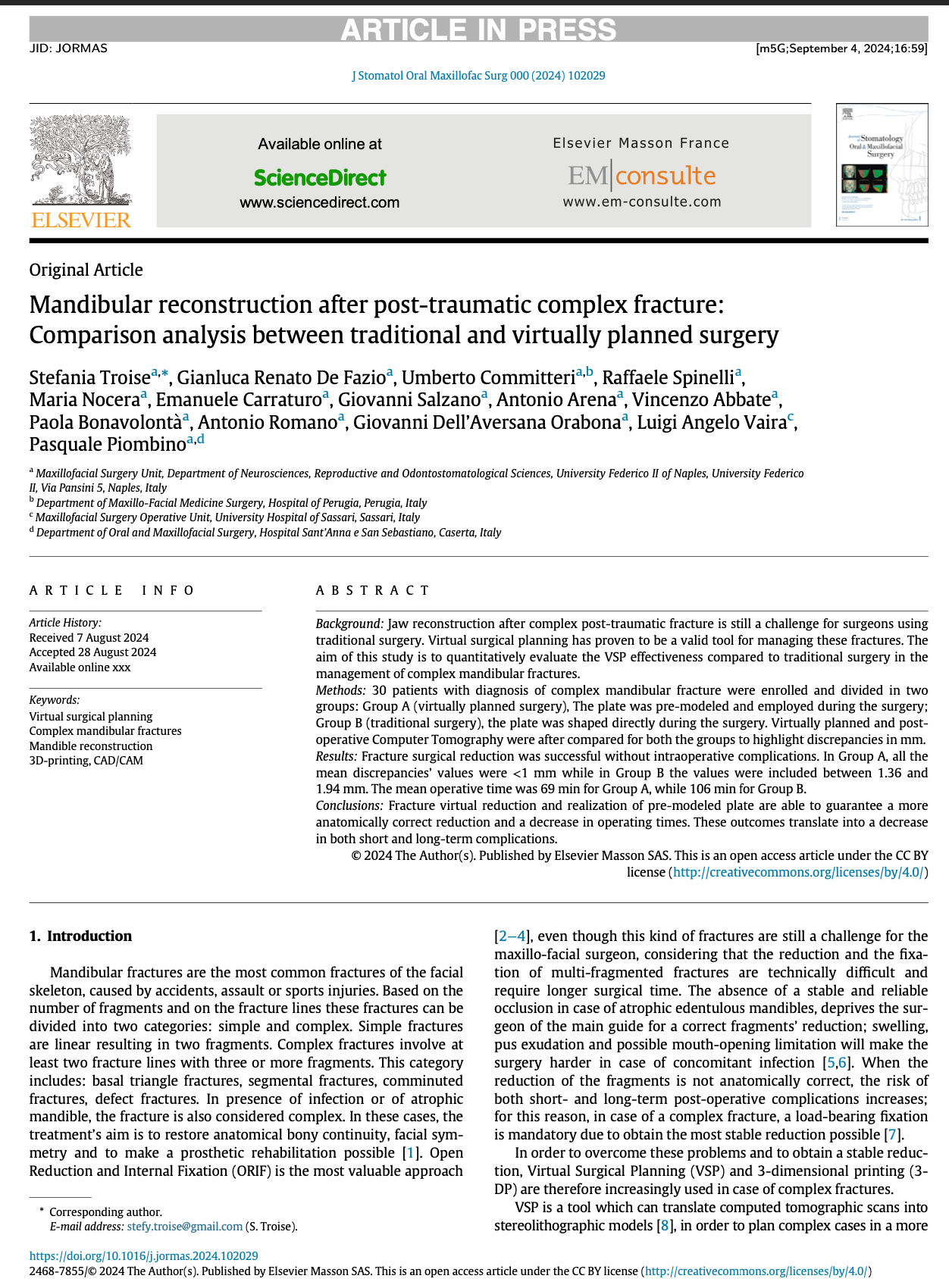
Background: Jaw reconstruction after complex post-traumatic fracture is still a challenge for surgeons using traditional surgery. Virtual surgical planning has proven to be a valid tool for managing these fractures. The aim of this study is to quantitatively evaluate the VSP effectiveness compared to traditional surgery in the management of complex mandibular fractures.
Methods: 30 patients with diagnosis of complex mandibular fracture were enrolled and divided in two groups: Group A (virtually planned surgery), The plate was pre-modeled and employed during the surgery; Group B (traditional surgery), the plate was shaped directly during the surgery. Virtually planned and post-operative Computer Tomography were after compared for both the groups to highlight discrepancies in mm.
Results: Fracture surgical reduction was successful without intraoperative complications. In Group A, all the mean discrepancies’ values were <1 mm while in Group B the values were included between 1.36 and 1.94 mm. The mean operative time was 69 min for Group A, while 106 min for Group B.
Conclusions: Fracture virtual reduction and realization of pre-modeled plate are able to guarantee a more anatomically correct reduction and a decrease in operating times. These outcomes translate into a decrease in both short and long-term complications.
Keywords: 3D-printing, CAD/CAM; Complex mandibular fractures; Mandible reconstruction; Virtual surgical planning.
DOI
Citazione
Condividi questo articolo scientifico...
Altri articoli pubblicati
Settembre 2024
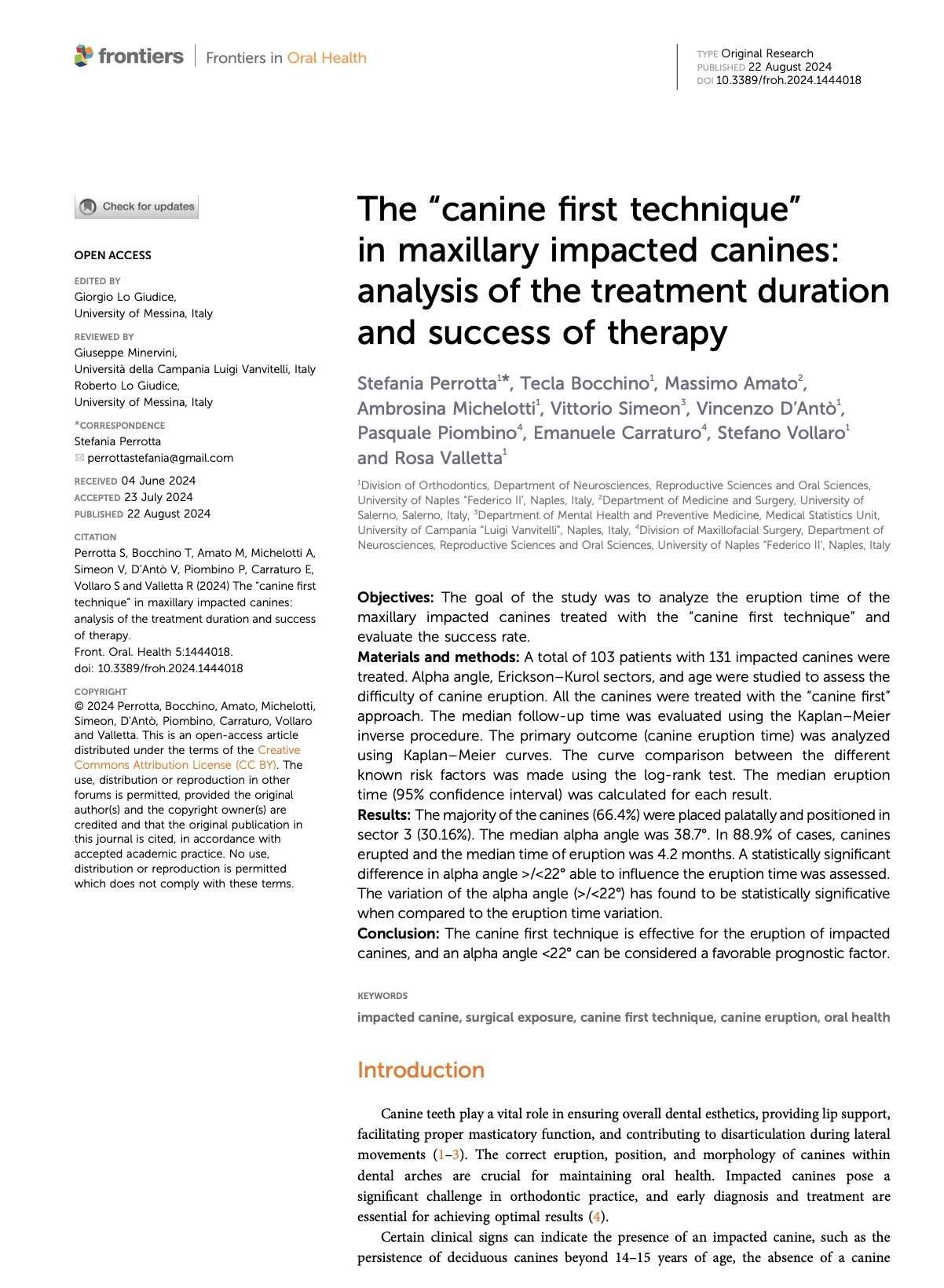
The canine first technique is effective for the eruption of impacted canines, and an alpha angle <22° can be considered a favorable prognostic factor.

Febbraio 2023
There are no studies that quantitatively analyze the degree of soft tissues facial ptosis and aging. Using a specific iPhone application, the faces of a heterogeneous group of volunteers were scanned and studied with the aim to virtually measure the entity of facial ptosis

Febbraio 2023
The purpose of this study was to compare the prevalence of olfactory dysfunction (OD) at different stages of the COVID-19 pandemic