

Authors
Abstract
Background: Persistent olfactory (POD) and gustatory (PGD) dysfunctions are one of the most frequent symptoms of long-COVID-19 but their effect on the quality of life (QoL) of patients is still largely unexplored.
Methods: An online survey was administered to individuals who reported to have had SARS-CoV-2 infection at least 6 months prior with persisting COVID-19 symptoms, including ratings of POD and PGD, and their physical (PCS) and mental (MCS) components of quality of life were assessed using the standardized short form 12 questionnaire (SF-12).
Results: Responses from 431 unique individuals were included in the analyses. The most frequent persistent symptoms were fatigue (42.9%), olfactory dysfunction (29.5%), gustatory dysfunction (22.3%) and muscle pain (19.3%). Respondents reporting POD or PGD showed significantly worse QoL, but only pertaining to the mental component.
Conclusions: POD and PGD are frequent symptoms of the long-COVID-19 syndrome and significantly reduce quality of life, specifically in the mental health component. This evidence should stimulate the establishment of appropriate infrastructure to support individuals with persistent symptoms, while research on effective therapies scales up.
Keywords: fat graft; lipofilling; maxillo-facial surgery; orofacial SSc; systemic sclerosis.
DOI
Citazione
Condividi questo articolo scientifico...
Altri articoli pubblicati

Gennaio 2023
J Clin Med. 2023 Jan 20;12(3):845. doi: 10.3390/jcm12030845. [...]

Dicembre 2022
The aim of this retrospective study has been to compare the surgical outcomes of patients undergoing superficial parotidectomy with three different instruments
Dicembre 2022
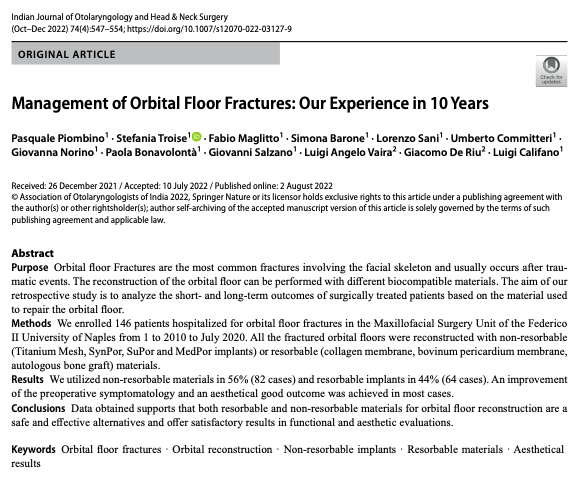
Indian J Otolaryngol Head Neck Surg. 2022 Dec;74(4):547-554. doi: [...]