

Authors
Abstract
Mandibular fractures are the third most frequent maxillo-facial fractures, and the subcondylar region is their most frequent site. This study evaluated the advantages of deep neuromuscular block during endoscopic surgery for subcondylar fractures. Twenty-five patients affected by subcondylar fractures were enrolled and divided into two groups: group A received an intraoperative booster of curare during the surgical procedure, group B underwent surgery without it. All patients were treated successfully by endoscope-assisted transoral approach. The analysis of the time required for surgery showed a reduction in group A compared to group B: the mean time for surgery in group B was 170 minutes for displacement between 0° and 45°, and 230 minutes for 45° to 90°; in group A the mean time was 117.5 and 147.5 minutes respectively. In conclusion, deep neuromuscular block seems to improve the surgical conditions in patients undergoing subcondylar endoscopic-assisted surgery; further studies are needed to better define this surgical protocol.
Keywords: fat graft; lipofilling; maxillo-facial surgery; orofacial SSc; systemic sclerosis.
DOI
Citazione

Altri articoli pubblicati
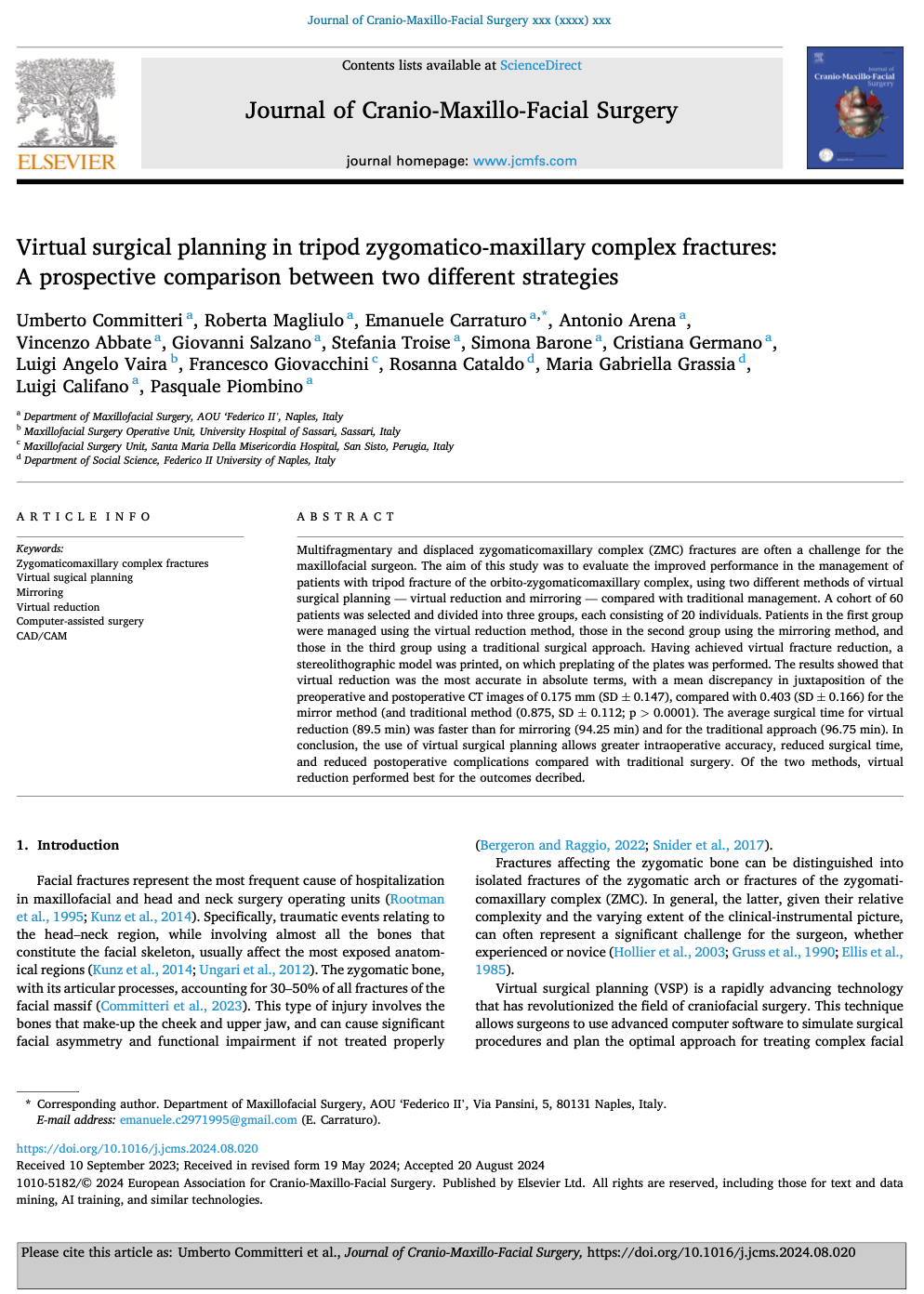
Settembre 2024
The use of virtual surgical planning allows greater intraoperative accuracy, reduced surgical time, and reduced postoperative complications compared with traditional surgery. Of the two methods, virtual reduction performed best for the outcomes decribed
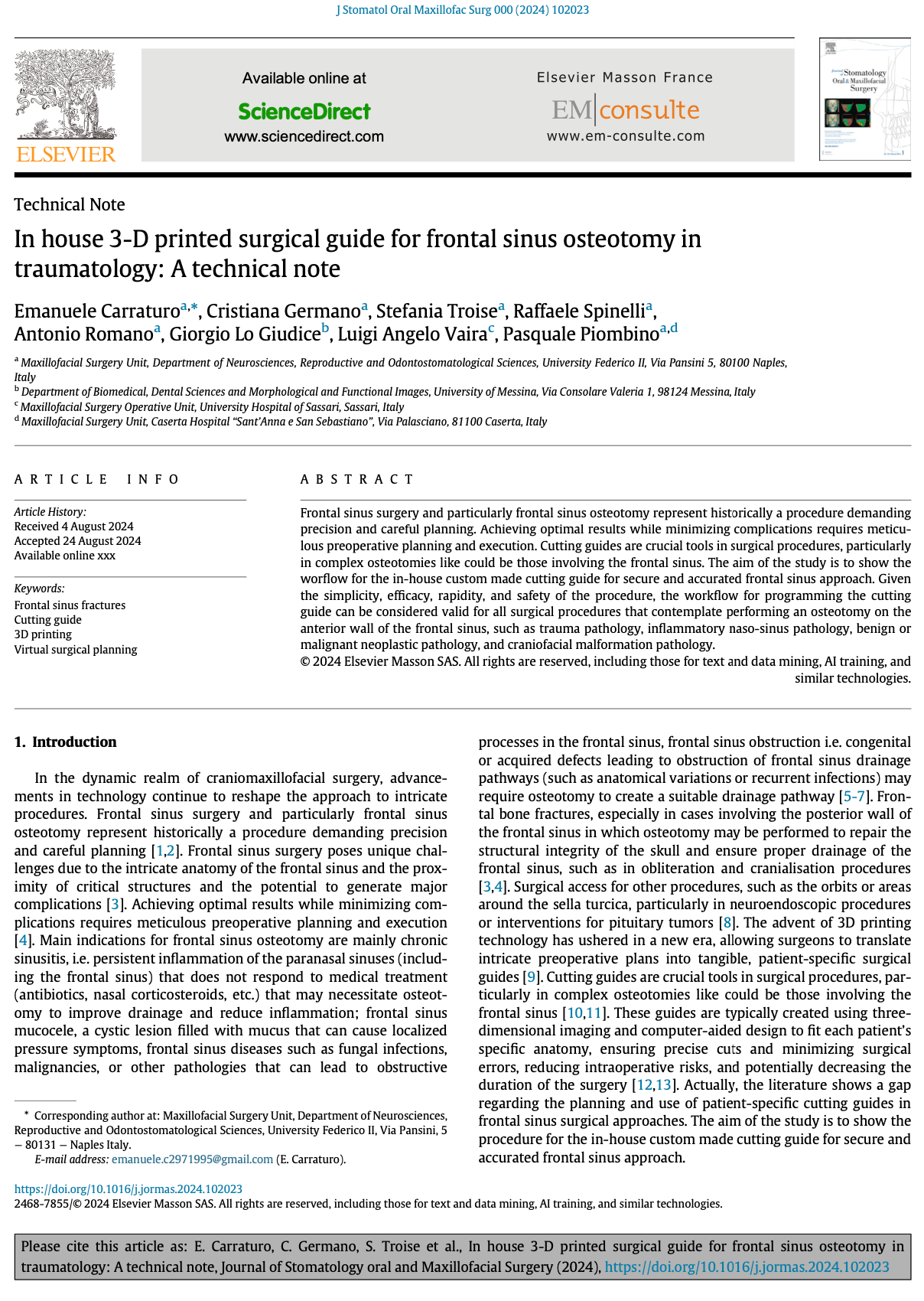
Settembre 2024
J Stomatol Oral Maxillofac Surg. 2024 Aug 30:102029 [...]
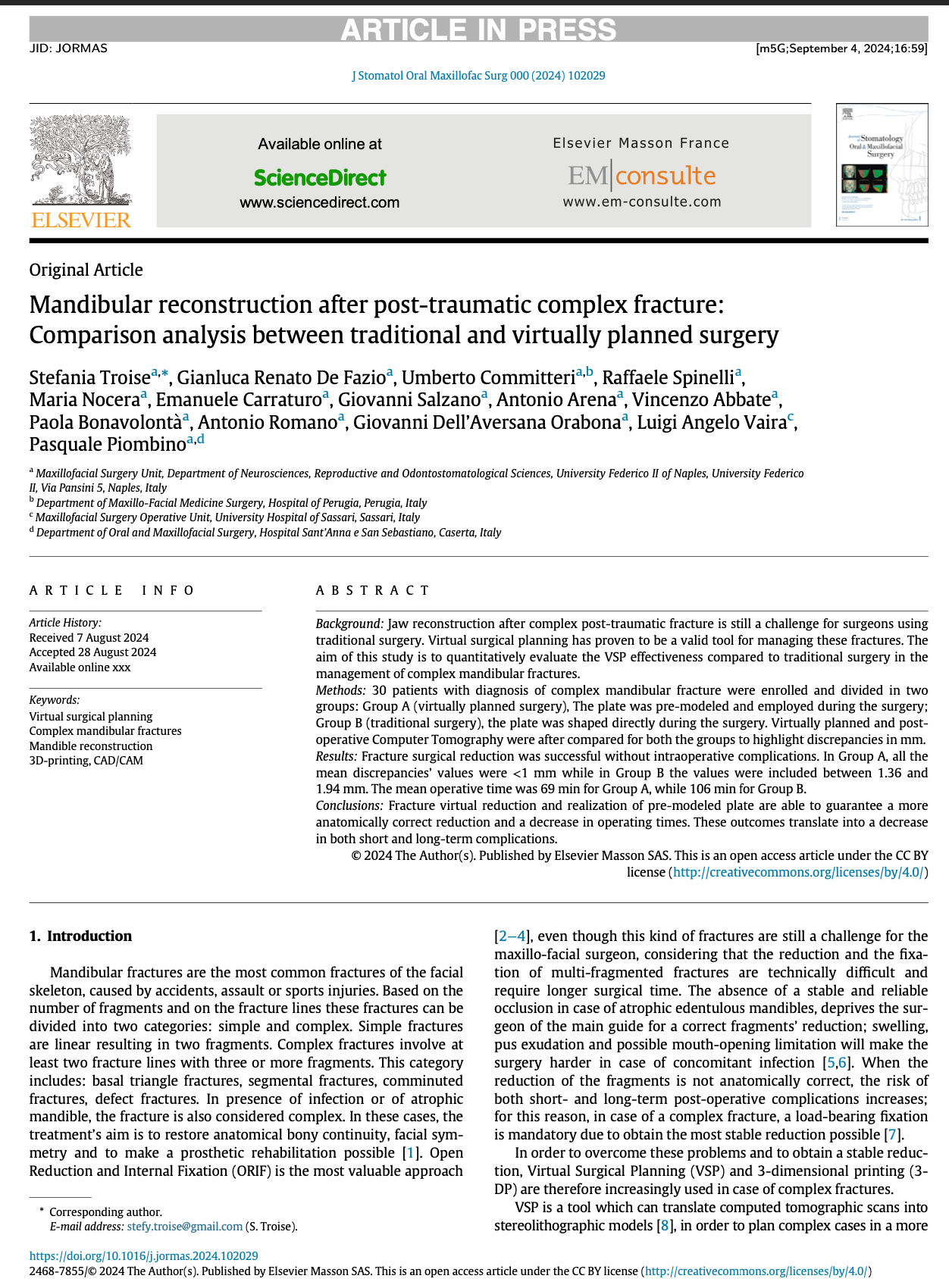
Settembre 2024
Fracture virtual reduction and realization of pre-modeled plate are able to guarantee a more anatomically correct reduction and a decrease in operating times. These outcomes translate into a decrease in both short and long-term complications.