

Authors
Abstract
Mandibular fractures are the third most frequent maxillo-facial fractures, and the subcondylar region is their most frequent site. This study evaluated the advantages of deep neuromuscular block during endoscopic surgery for subcondylar fractures. Twenty-five patients affected by subcondylar fractures were enrolled and divided into two groups: group A received an intraoperative booster of curare during the surgical procedure, group B underwent surgery without it. All patients were treated successfully by endoscope-assisted transoral approach. The analysis of the time required for surgery showed a reduction in group A compared to group B: the mean time for surgery in group B was 170 minutes for displacement between 0° and 45°, and 230 minutes for 45° to 90°; in group A the mean time was 117.5 and 147.5 minutes respectively. In conclusion, deep neuromuscular block seems to improve the surgical conditions in patients undergoing subcondylar endoscopic-assisted surgery; further studies are needed to better define this surgical protocol.
Keywords: fat graft; lipofilling; maxillo-facial surgery; orofacial SSc; systemic sclerosis.
DOI
Citazione

Altri articoli pubblicati
Settembre 2024
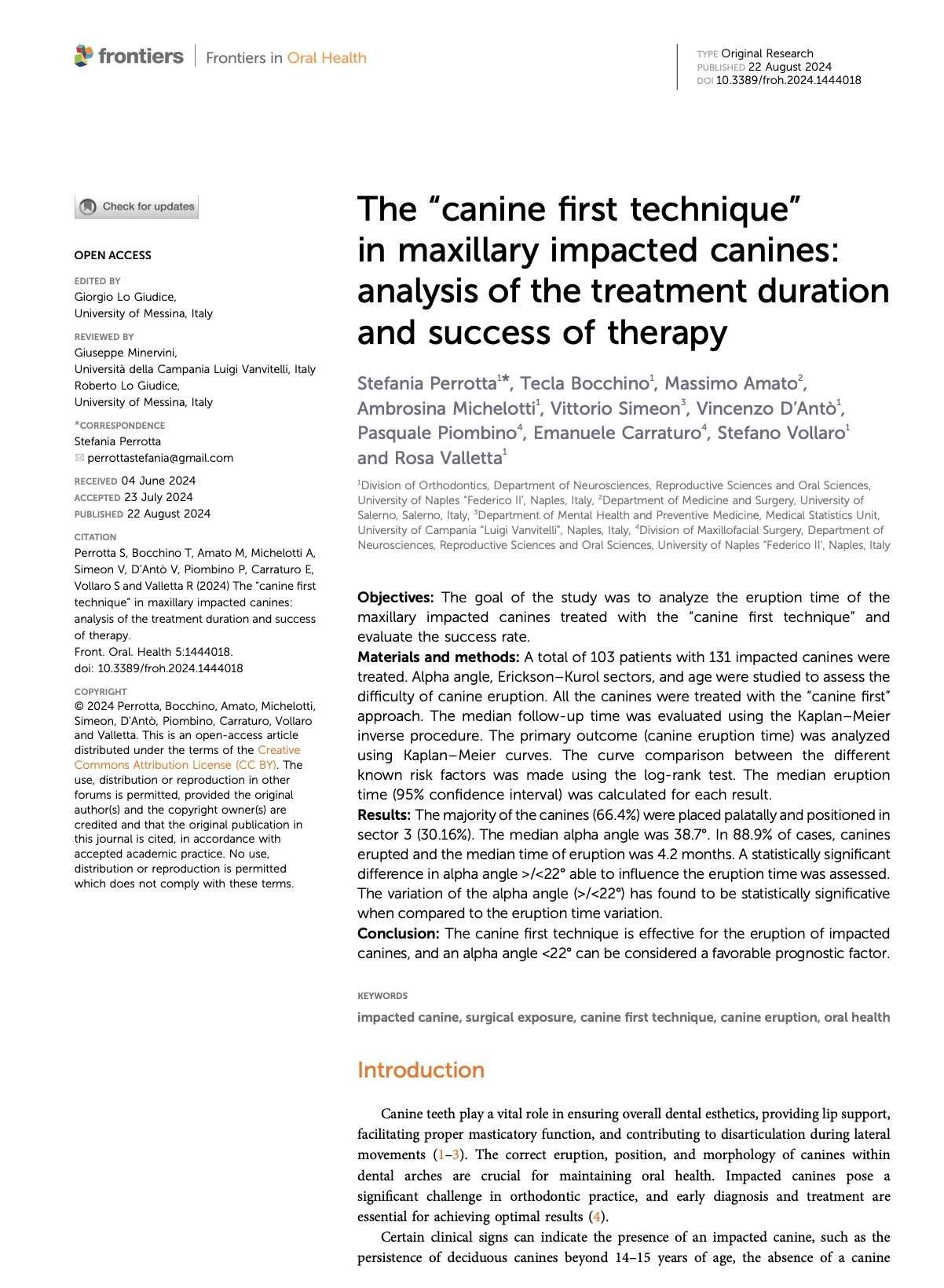
The canine first technique is effective for the eruption of impacted canines, and an alpha angle <22° can be considered a favorable prognostic factor.

Febbraio 2023
There are no studies that quantitatively analyze the degree of soft tissues facial ptosis and aging. Using a specific iPhone application, the faces of a heterogeneous group of volunteers were scanned and studied with the aim to virtually measure the entity of facial ptosis

Febbraio 2023
The purpose of this study was to compare the prevalence of olfactory dysfunction (OD) at different stages of the COVID-19 pandemic